Eye health is a cornerstone of a productive life because it is essential for education, work, safety and overall quality of life. For millions of people in both urban and rural areas in India, vision is under threat from several serious eye complications. Different areas have different challenges, but the need for awareness and proper eye care remains equally important everywhere.
The Achyuta Niratah Trust believes that location should never determine whether or not you can see clearly. This blog will raise awareness about common eye complications and eye care, both in cities and villages. It will also highlight our commitment to shortening the distance between them in terms of vision care.
Eye health challenges in rural India
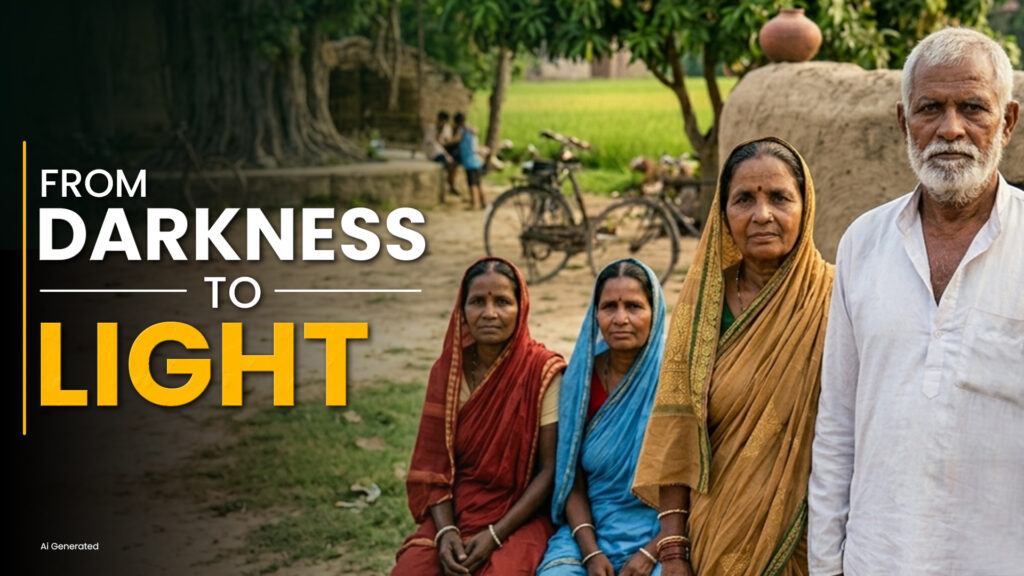
People of villages, especially farmers,and daily wage workers, are the backbone of our nation. They face the following challenges, which promote several vision problems or may lead to permanent blindness.
- Prolonged exposure to direct sunlight, dust, and agricultural chemicals.
- Increased risk of eye injury and infections for field work.
- Lack of awareness regarding different eye issues and vision care.
- Financial problems to afford eye checkups and treatment.
- Shortage of ophthalmologists in rural areas. Difficulty in travelling long distances to access an eye hospital.
- Belief in traditional remedies instead of medical treatment. Sometimes it worsens the problems.
- Poor nutrition in childhood causes many vision disorders.
- Unhealthy care in childhood and during the pregnancy of the mother may lead to eye conditions.
- Women often have less access to healthcare services due to gender inequality.
Common eye diseases of rural people
- Cataract.
- Conjunctivitis
- Night blindness
- Corneal ulcer
- Eye injuries
- Refractive errors
Eye health challenges in urban India
People of cities drive economic growth, innovation and modern lifestyles. Urban residents face the following challenges due to the fast-paced environment and work demands in city life.
- Prolonged use of digital screens (computers, mobiles and tablets).
- Sedentary indoor lifestyle with limited outdoor activities.
- Air pollution and allergies.
- Excessive use of AC causes dry eyes.
- High work pressure and improper sleep.
- Exposure to artificial lighting.
- Neglect of regular eye checkups due to busy schedules, despite the availability of eye care services.
- Crowded places help to spread contagious diseases.
- Financial problem to afford eye care in the slum area of the city.
- Chronic diseases like diabetes, blood pressure and cholesterol.
Common eye diseases of urban people
- Computer vision syndrome (digital eye strain).
- Dry eye syndrome
- Glaucoma
- Diabetic Retinopathy
- Age-related Macular Degeneration (AMD)
- Conjunctivitis
- Hypertensive Retinopathy
- Retinal Detachment
- Presbyopia
- Meibomian Gland Dysfunction (MGD)
Eye care for rural as well as urban areas
The main reason behind eye conditions in both villages and cities is the lack of awareness. Most people ignore eye care by believing that poor vision is a normal part of aging and minor issues do not require medical attention.This myth can lead to serious eye complications or even permanent blindness.The following eye care preventives are important in saving the eyes.
General vision care:
- Regular eye checkups
- Early diagnosis and timely treatment.
- Use prescribed glasses and contact lenses properly.
- Maintain proper eye hygiene.
- Protective eyewear
- Avoid self-medication
Vision care for rural people:
- Eat nutritious food.
- Use clean water to wash your eyes.
- Learn everything about eye disease and care.
- Avoid misconceptions and superstitious practices.
- Give priority to women’s eye health.
- Proper care of children and pregnant mothers.
- Attend eye screening camps and awareness programmes.
- Seek medical attention for eye injury and infections.
- Safety gear against sunlight.
Vision care for urban people:
- Limit excessive screen time.
- Practice eye exercises regularly.
- Eye rest and proper sleep.
- Drink sufficient water.
- Increase physical activities.
- Spend more time outdoors.
- Control blood pressure, diabetes and cholesterol.
- Safety gear against contagious diseases in crowded localities.
- Use telemedicine facilities in eye care.
- Control work pressure and mental stress.
Our commitment towards a vision for All
We are working to dismantle the barriers between patients in the remote area and comprehensive eye care because we believe that vision is a basic human right. We organise regular medical camps in rural areas to reach countless people who cannot afford private eye care. Our mobile eye care unit brings renowned eye doctors, advanced diagnostic tools and medicines directly to the doorsteps from a leading and trusted eye hospital in Kolkata. So that people in rural areas can also access eye care facilities that are nearly comparable to those available in urban areas.
Our completely free services include:
- Comprehensive eye exams.
- Consultation with eye experts.
- Effective treatment.
- Distribution of recommended spectacles.
- Delivering prescribed medicines.
- Recommend eye surgeries and advanced treatment.
- Awareness programmes for eye care.
We are proudly expressing that we have restored clear vision to more than 5000 people by organising 600+ camps in more than 10 districts in India. Our mission is to reduce preventable blindness in the nation by turning away no patients due to financial problems.
Join our vision
Awareness is the first line of defence of eye health for anyone. Make your family, friends and community aware of the medical information regarding eye care. Visit our website to get information and to attend our upcoming camps in your area. The moral duty of all of us is to ensure that no one in remote villages is left behind in achieving a clear vision.
Conclusion
Healthy vision is not a luxury but a necessity. It empowers individuals as well as the community. Let us cultivate a nation where a citizen, who lives even in a small and remote village, enjoys a healthy vision.
Frequently Asked Questions (FAQs)
Q1. What are the main challenges in delivering eye care to rural areas?
The primary challenges include a severe lack of local optometrists and ophthalmologists, long travel distances to specialized clinics, and a lack of advanced diagnostic equipment. Additionally, lower awareness of preventable eye conditions often leads to delayed treatment, resulting in irreversible vision loss.
Q2. How do urban communities face eye care challenges?
Urban populations may have better access to healthcare facilities, but challenges such as excessive screen time, air pollution, sedentary lifestyles, high treatment costs, and delayed eye checkups can negatively impact eye health.
Q3. How can eye diseases be prevented?
Many eye diseases can be prevented or managed through routine eye examinations, a healthy diet, proper eye protection, controlled blood sugar levels, and avoiding smoking.
Q4. What are the hidden eye care challenges in crowded urban slum communities?
While urban areas technically have advanced eye hospitals nearby, low-income urban populations face severe financial and systemic barriers. High consultation costs, lack of insurance coverage, and massive wait times in public hospitals push specialized care out of reach. Additionally, dense urban environments expose residents to higher rates of environmental pollution and industrial eye injuries without proper safety protocols.
Q5. What are the signs that indicate a need for an eye examination?
Warning signs include blurred vision, eye pain, frequent headaches, double vision, sensitivity to light, difficulty seeing at night, and sudden changes in vision.