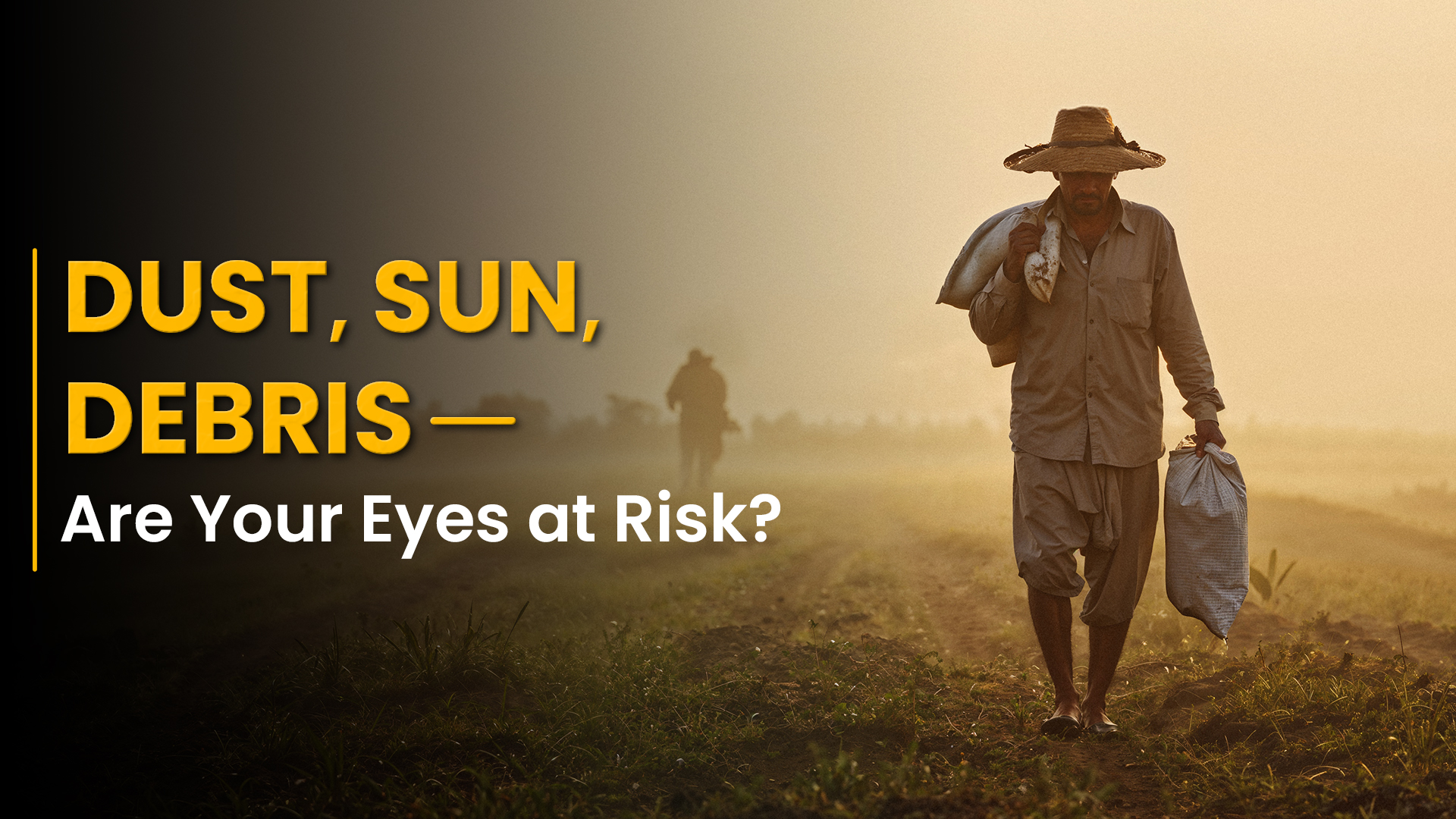
Healthy vision is crucial for everyday work for farmers and outdoor labourers. From sowing seeds and harvesting crops to handling tools and working under strong sunlight, the eyes are exposed to dust, soil, plant particles, insects, chemicals, and ultraviolet (UV) rays. Many eye injuries can be prevented with simple daily precautions.
Common Eye Risks in Agricultural Work
Working in fields can expose the eyes to several hazards. Dry soil and dust may cause irritation, while small pieces of wood, plants, or stones can enter the eye during cutting, digging, or harvesting. Inadvertent splashing of pesticides and fertilisers into the eyes might result in severe eye injury. Over time, prolonged exposure to intense sunlight may also have an impact on eye health.
Simple Ways to Protect Your Eyes
1. Wear protective eyewear
When cutting crops, operating machinery, applying chemicals, or working in dusty environments, wear the appropriate safety glasses or protective goggles. An essential defence against spills and particles is provided by properly fitted eyeglasses.
2. Protect your eyes from the sun
When working outdoors for long periods, use UV-protective sunglasses and a wide-brimmed hat or other suitable head covering. This may lessen the amount of time spent in direct sunshine.
3. Handle agricultural chemicals carefully
When using pesticides, herbicides, and other agricultural chemicals, always adhere to the directions. Wear appropriate protective equipment and avoid touching your eyes while handling these substances.
4. Never rub an irritated eye
Rubbing may exacerbate irritation or cause damage if dust or a tiny particle gets inside your eye. Rinse your eyes gently with clean water after washing your hands. Seek professional eye care if the issue persists or if vision is compromised.
5. Keep hands and equipment clean
Before touching your face or eyes, wash your hands properly. Another way to lower the risk of eye infections is to keep work equipment, fabric, and protective eyewear clean.
6. Do not ignore an eye injury
Sometimes a minor injury can turn into a major one. It is not advisable to disregard pain, persistent redness, swelling, light sensitivity, bleeding, or diminished or blurred vision. Instead of depending on home treatments, get medical help as soon as possible.
Protect Your Eyes Every Day
Complex measures are not necessary for good eye care. Farmers and outdoor labourers should safeguard their most important sense—vision—by using the proper gear, exercising caution when handling chemicals and equipment, and reacting promptly to injuries.
Our Commitment
The Achyuta Niratah Trust is dedicated to assisting communities in comprehending the significance of eye health and obtaining useful advice on eye care. We work to bring trustworthy information closer to those who need it most by promoting eye health awareness, offering advice, launching screening programs, and providing assistance to individuals in need of eye care. We encourage all farmers and outdoor workers to incorporate eye safety into their daily work because we think that safeguarding eyesight is a shared duty.
Frequently Asked Questions (FAQs)
Q1. Why are farmers at higher risk of eye problems?
Farmers face a higher risk of eye problems because they are continuously exposed to environmental and occupational hazards such as UV radiation, airborne dust, chemical pesticides, and physical debris from crops and machinery. Can sunlight damage my eyes?
Q2. Can sunlight damage my eyes?
Yes, sunlight can damage our eyes. Without proper protection, the sun’s ultraviolet (UV) rays can cause painful, temporary corneal damage, accelerate the clouding of the eye’s lens (cataract formation), and lead to serious long-term issues such as vision loss or abnormal growths in eye tissues.
Q3. What should I do if pesticide or another chemical gets into my eye?
Immediately flush the affected eye with a gentle stream of clean, running water for 15 to 20 minutes. Keep the eyelid open and direct the flow of water from the inner corner (near the nose) towards the outer corner to prevent the chemical from spreading. Remove contact lenses after the first 5 minutes; do not rub the eye, and seek emergency medical attention promptly.
Q4. Can children working or playing around farms also suffer eye injuries?
Yes. Children are at risk of eye injuries while working or playing around the farm. The risks they may face include:
Dust, dirt, seeds, and plant matter can enter the eye and cause irritation or damage. Farm machinery and equipment can cause serious eye injuries. Pesticides and other chemicals can cause severe irritation or chemical burns. Tree branches, sticks, and crop leaves can strike or scratch the eye. Airborne particles generated during harvesting, grinding, or other farm activities can enter the eyes and cause injury. Prolonged exposure to ultraviolet (UV) radiation from direct sunlight without proper eye protection can damage the eyes and increase the risk of eye problems.
Q5. When should an eye injury be treated as an emergency?
An eye injury must be treated as a medical emergency if serious symptoms occur, such as exposure to chemicals, penetration by an object, a cut or puncture to the eyeball, sudden loss of vision, double vision, severe pain, or bleeding inside the eye. In such cases, seek immediate medical attention and avoid rubbing or applying pressure to the eye.
Q6. What should I do if I suffer a serious eye injury in the field?
If you sustain a serious eye injury while on the field, never rub or apply pressure to the eye, nor attempt to remove any embedded object. In case of chemical splashes, flush the eye with clean water for 20 minutes. If there is a cut or a penetrating injury, gently place a rigid shield over the eye without applying pressure and seek emergency medical attention immediately.